A full arch,
fixed in place.
When the teeth in a jaw are failing rather than failed, replacing them one at a time stops making sense. This is the alternative, and it is far quicker than it used to be.
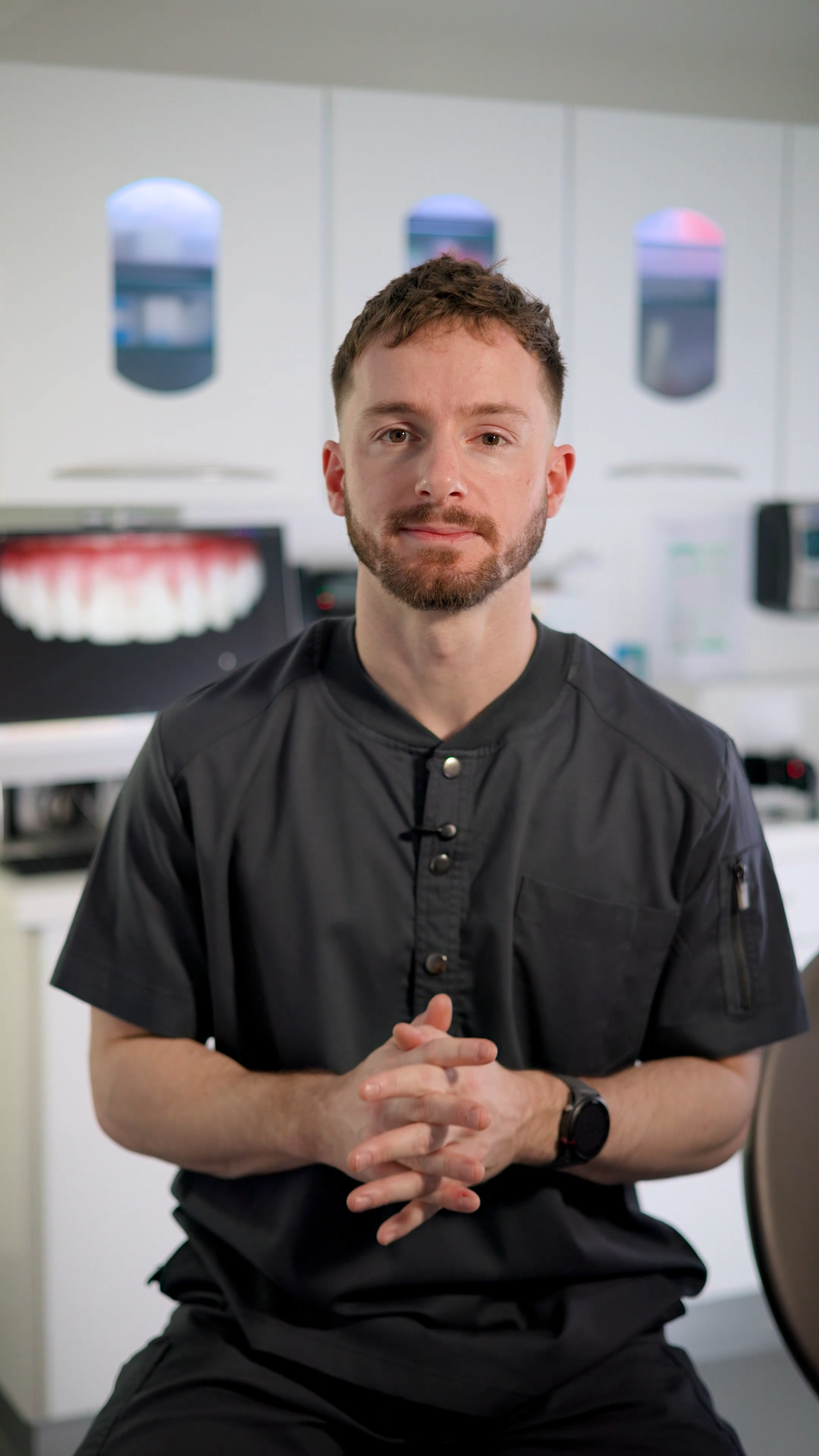
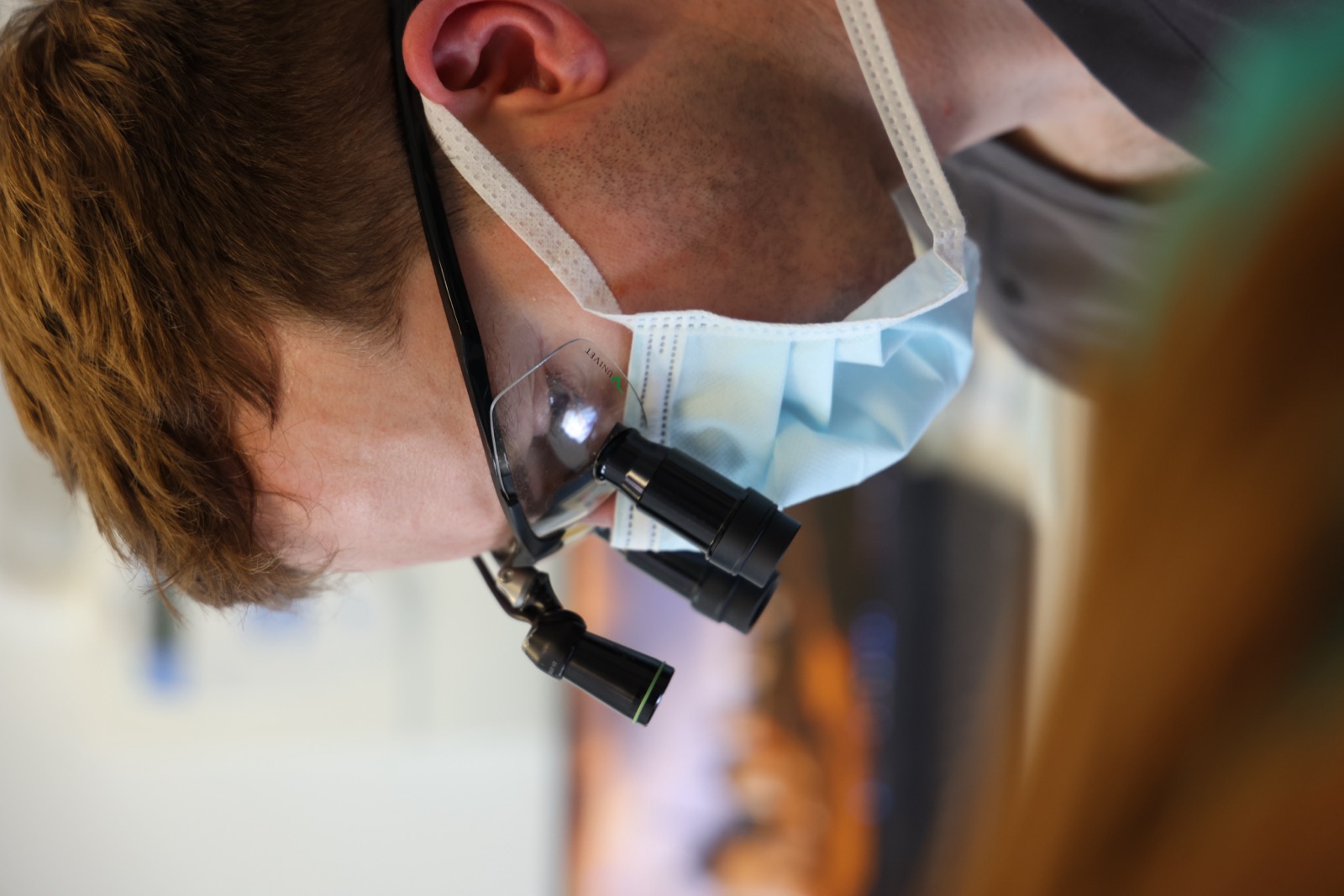
Dr Alex Hadley · Essex & Suffolk
Four implants, one fixed bridge.
A full arch means the teeth in one jaw are carried on a small number of implants, usually four, rather than sitting on the gum like a denture. The bridge is fixed. It does not come out at night and it does not move while you eat.
The part that has changed is the timing. A decade ago this meant extractions, a denture for six months, then implants, then another four to six months of healing before anyone started making teeth. I can now take patients from failing teeth to fixed final teeth in as few as three appointments: surgery, data collection, fit.
That compression comes from planning rather than speed. Modern implants are planned digitally to within about a millimetre of the final position, which is accurate enough that the bridge can sometimes be made before the surgery and simply fitted afterwards.
When this is the right answer.
Your teeth are failing rather than failed
This is the decision point. If several teeth are on their way out, planning the arch as a whole is usually better than replacing them one at a time for years.
You already wear a full denture
A denture that has never felt right is one of the most common reasons people ask about this, and the change tends to be the one they notice most.
You have been told nothing can be done
Advanced gum disease and long-term bone loss are not automatic disqualifiers. They change the plan rather than end it.
You want to stop having emergencies
The point of doing a whole arch is that you stop coming back with the next problem in the same jaw.
Real patients. Real treatments.
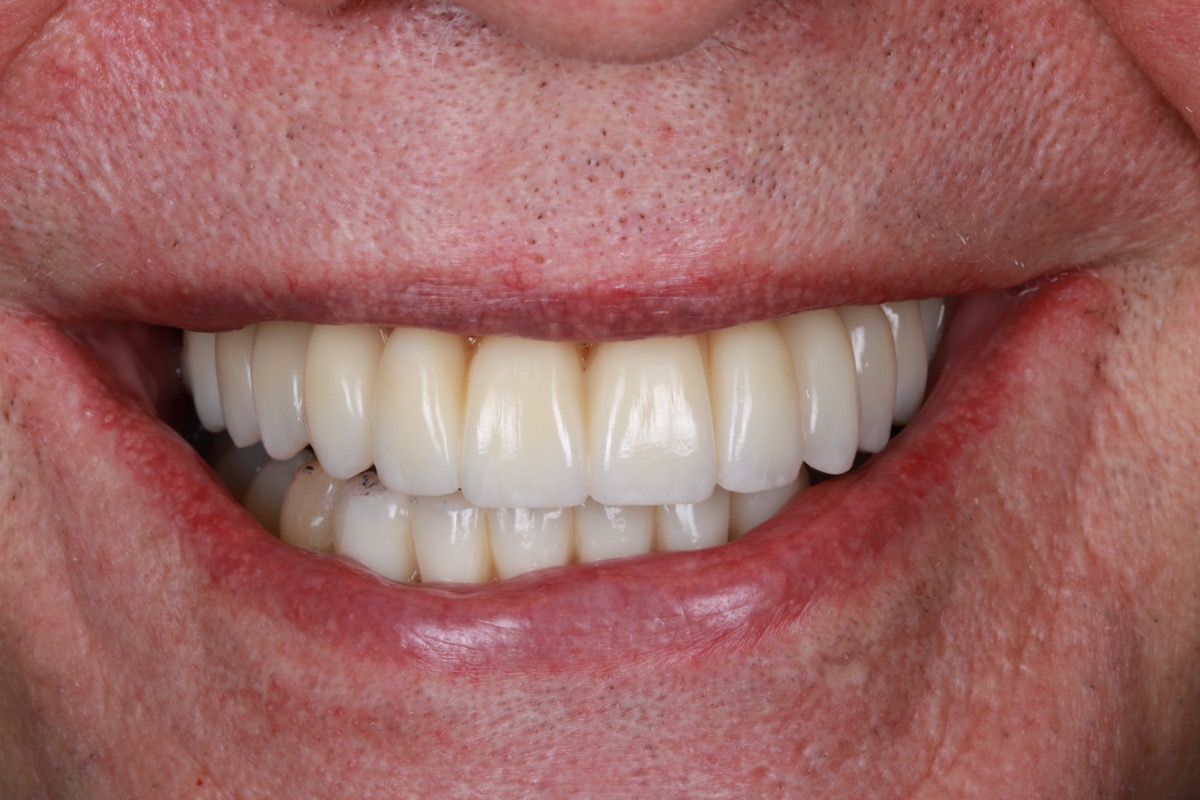
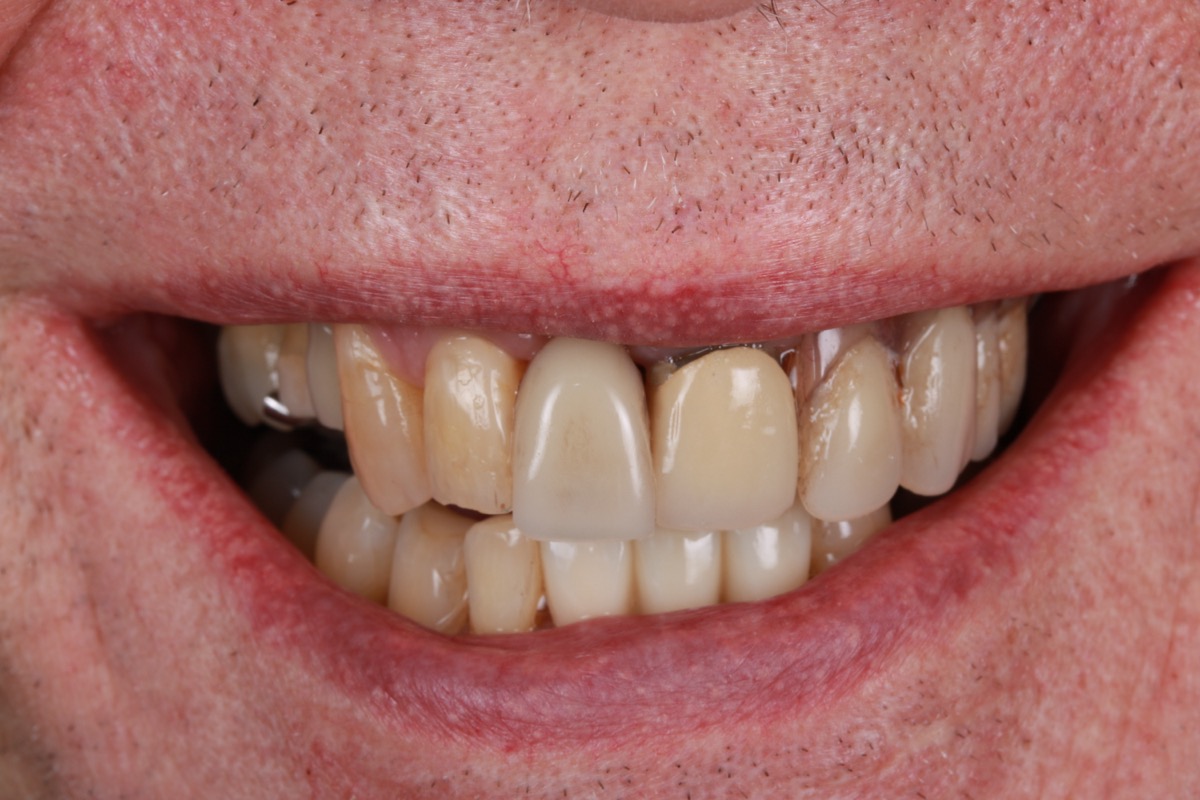
Planned and carried out by Dr Alex Hadley. Drag any slider to see where each one started.
 Before
After
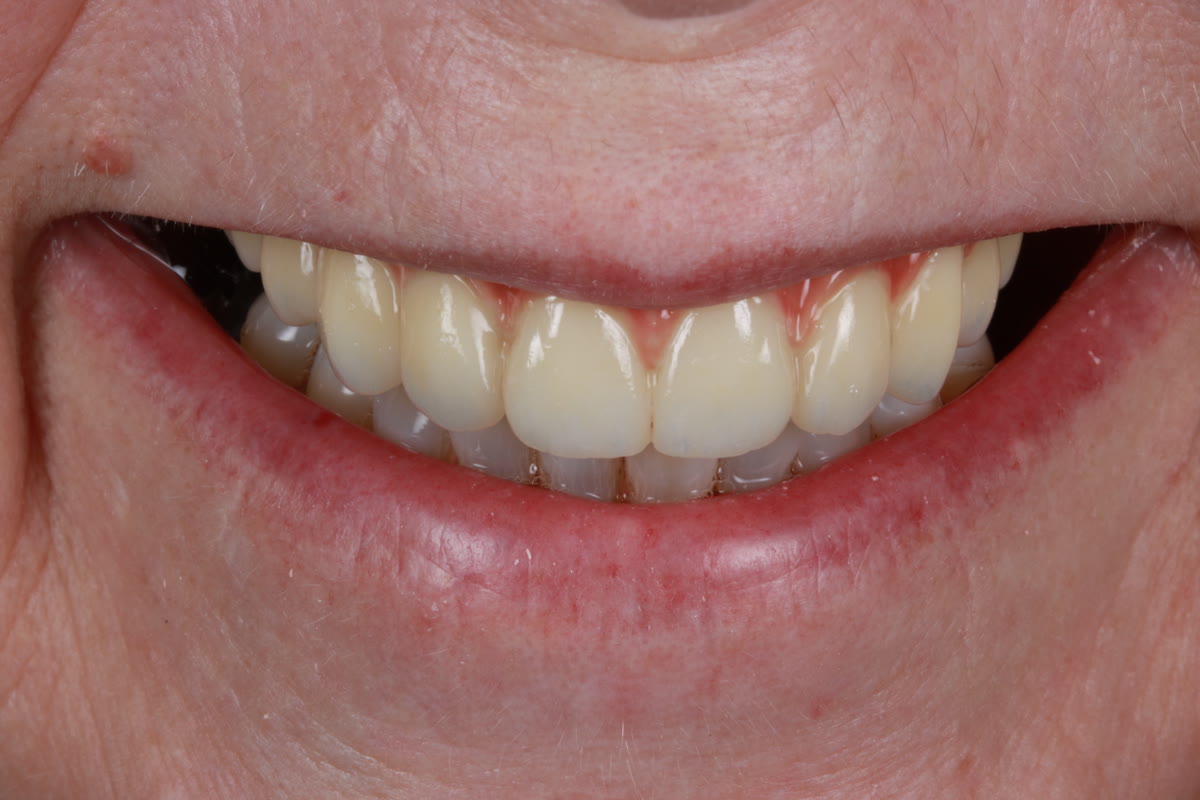
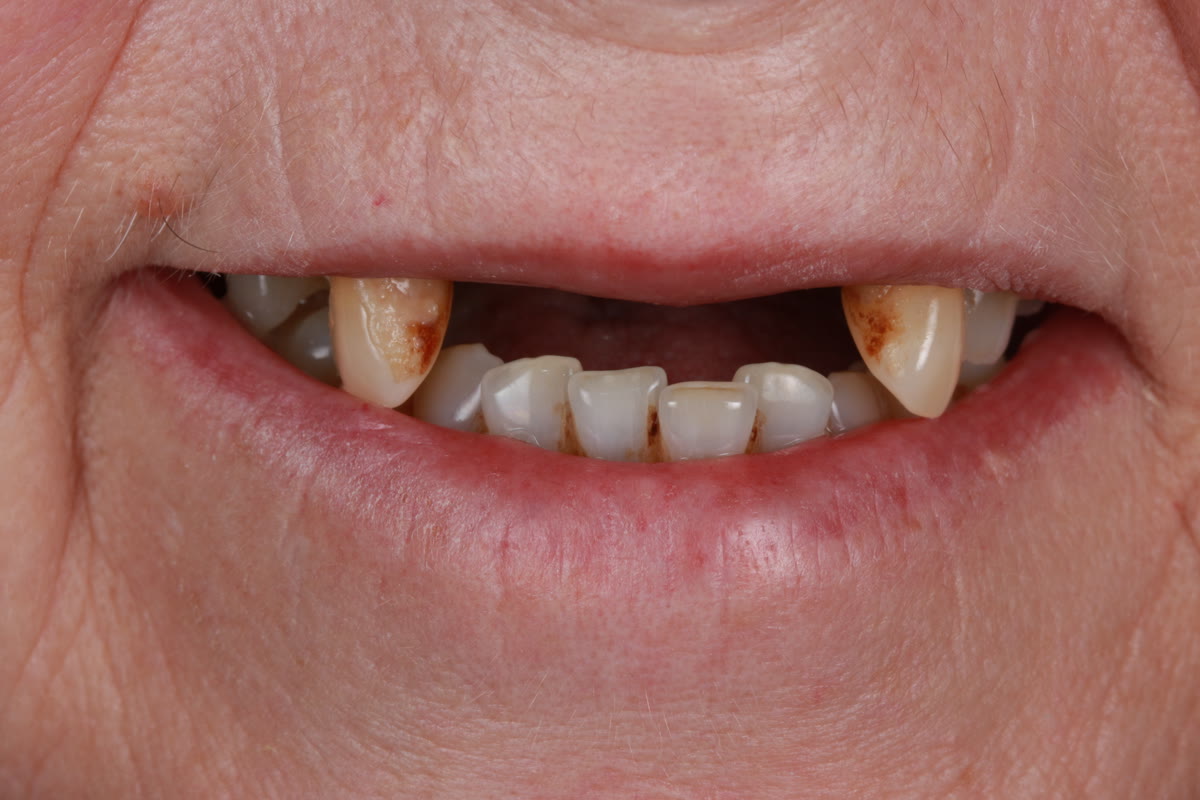 Before
After
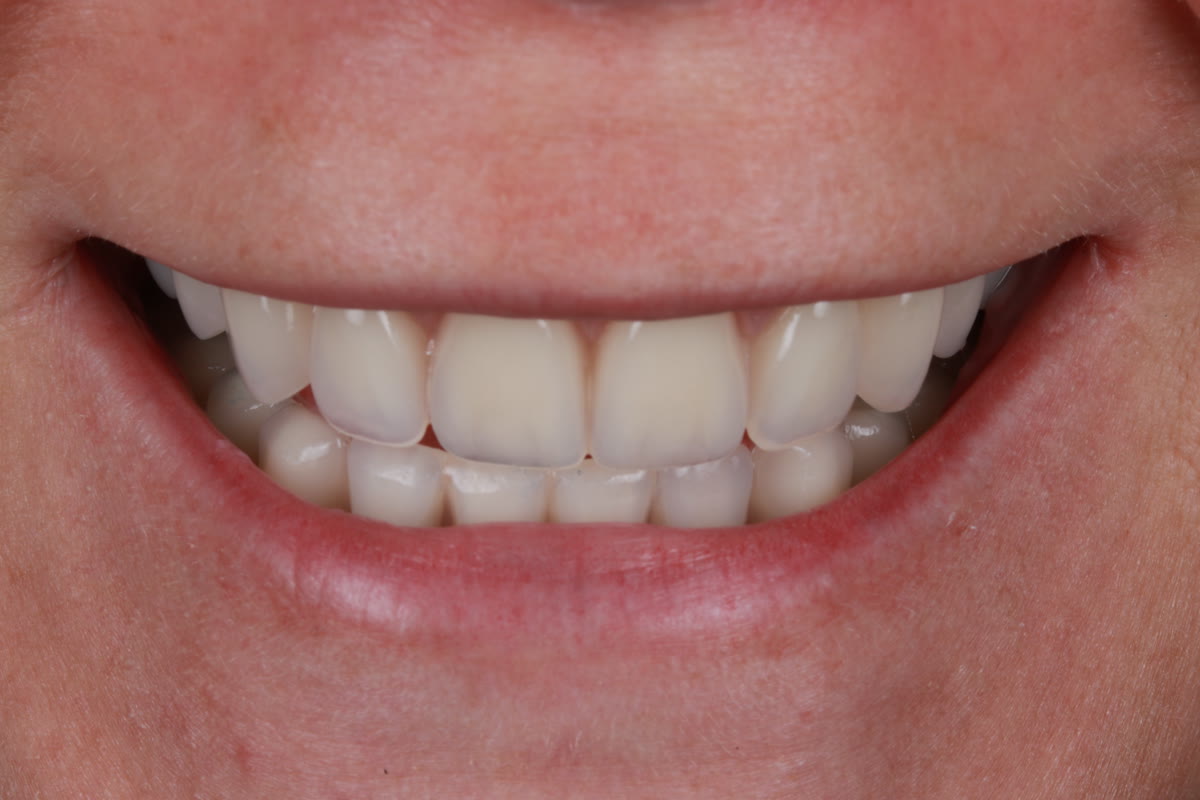
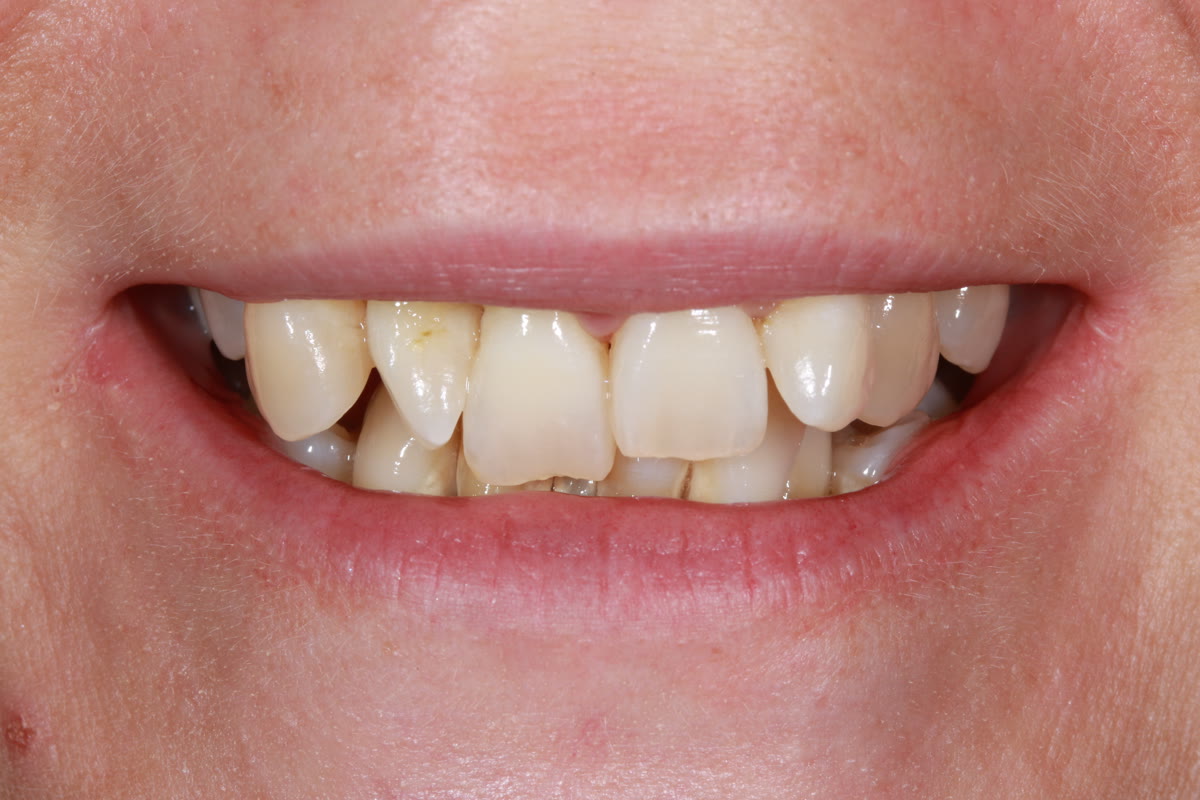 Before
After
Real patients of Dr Alex Hadley. Individual results vary, and every case is planned around the patient in front of us.
What actually happens.
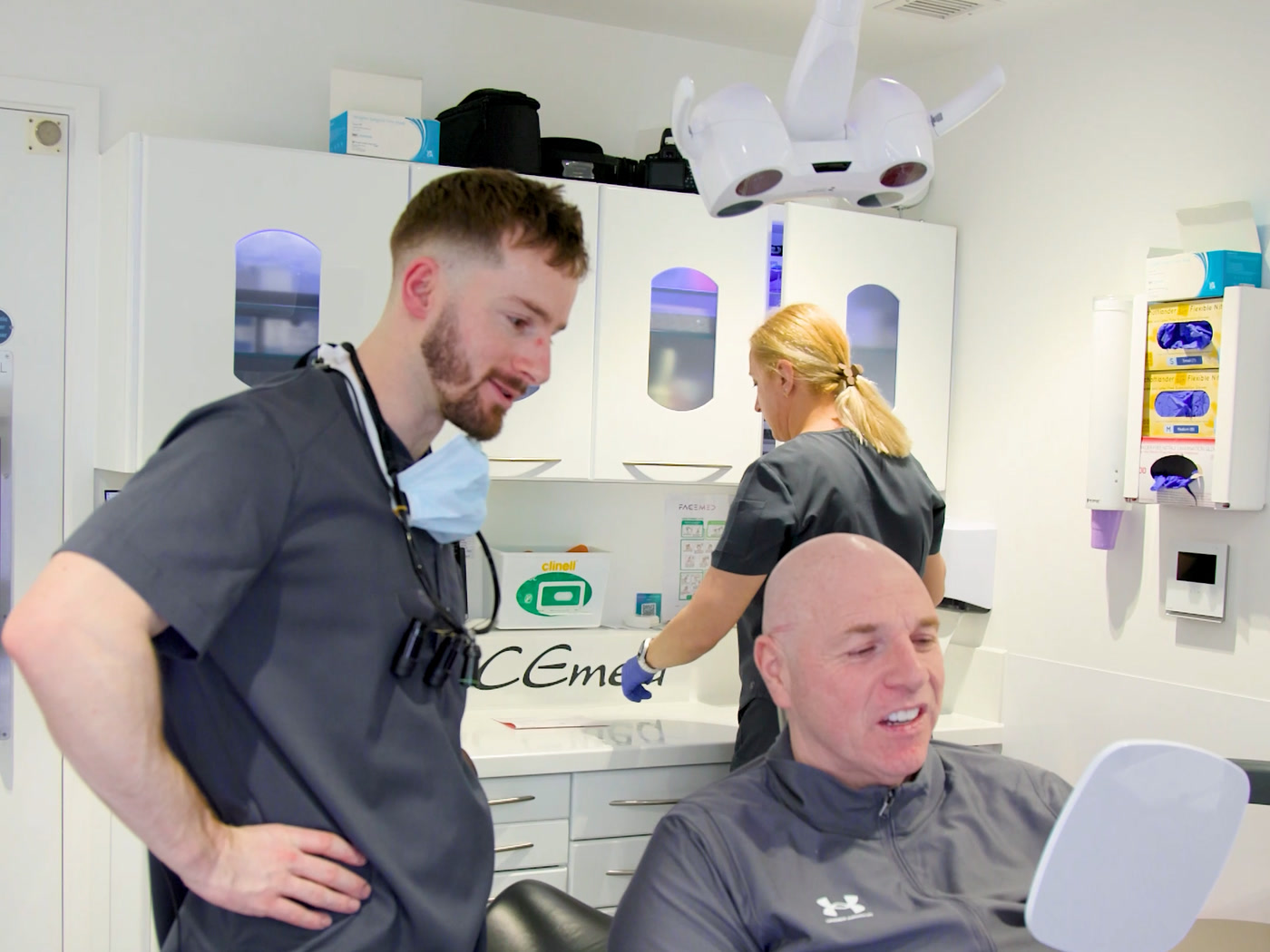
Records and a scan
Photographs, X-rays and a CBCT scan so the bone is measured properly. Nothing is planned off a guess about what is underneath.
The plan, before anything happens
Where the implants go, what the teeth will look like, how long it takes, how long you are in temporary teeth. All answered before we start, not during.
Surgery and immediate teeth
The implants are placed and a fixed set of teeth goes on. You do not leave without teeth.
The temporary set does the deciding
The temporaries are worn, looked at and lived with, and then used to decide the shape and shade of the finals. That is where the result is actually chosen.
The final bridge
Made in zirconia, stained and glazed so it keeps a gradient of colour rather than reading as a flat white slab.
The questions I get asked.
Let's create a smile you'll love long term.
Tell me a little about what's on your mind and we'll arrange a relaxed consultation. No pressure, no obligation, just a conversation.
Request a consultation
We'll be in touch within one working day.